How to Buy a Home in Vineyard Without Letting Rates Stop You
The mortgage rate sitting at 7% feels like a brick wall when you're trying to buy a home in Vineyard.
You've done the math. A $500,000 townhome at 7% means a monthly payment around $3,200 (before taxes and insurance). That same loan at 4%? It drops to about $2,400. That's $800 a month - or nearly $10,000 a year - just vanishing into interest.
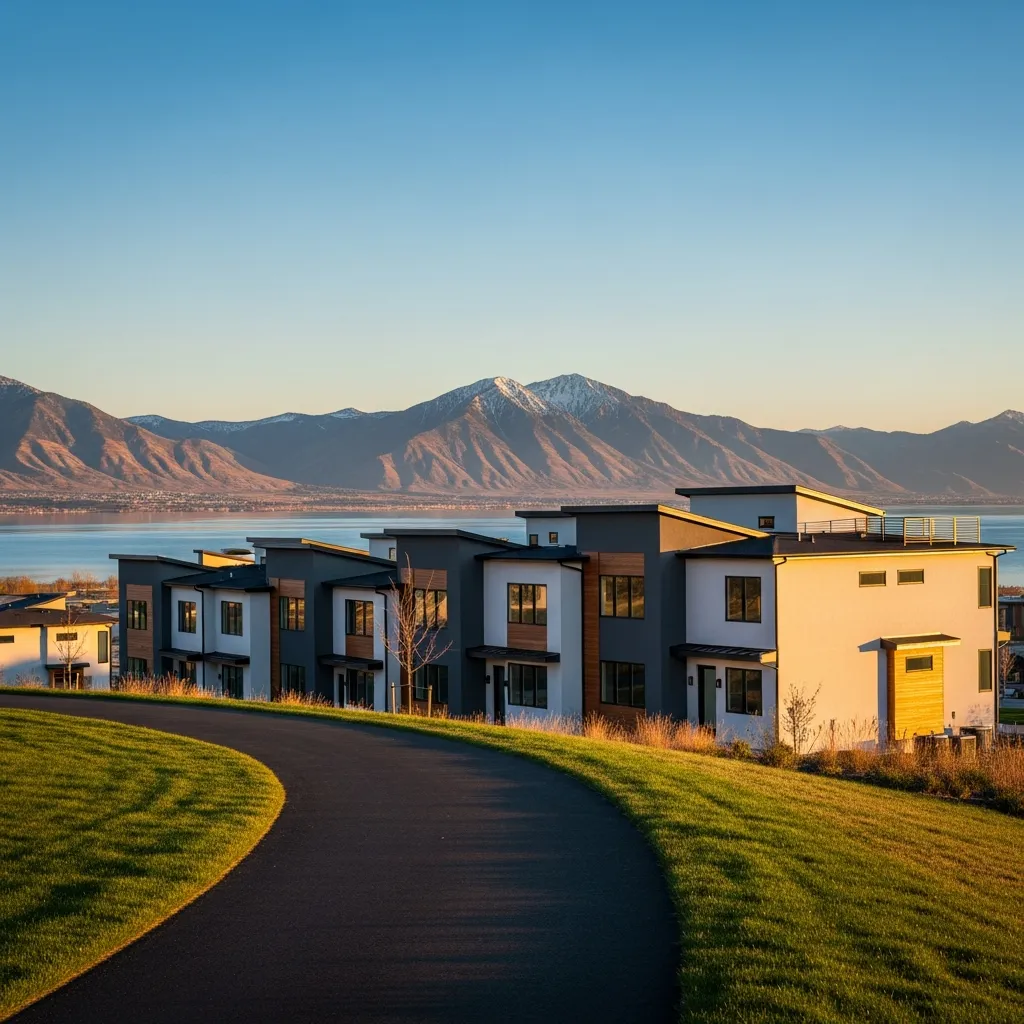
And Vineyard isn't getting cheaper. New builds keep popping up along the lake. The Geneva Road corridor is packed with cranes. Young families and tech workers keep flooding in from Silicon Slopes because they want the trail systems, the newer construction, and that mountain-and-water view without the Lehi price tag.
But here's what most buyers don't realize: you don't have to accept that 7% rate as your reality. Not in Vineyard. Not right now.
Builders are sitting on inventory they need to move. Resale sellers are getting nervous about competition. And Utah just handed you a $20,000 assist if you know how to use it.
This is not about waiting for rates to drop. This is about stacking every tool available so you can buy now and win anyway.
What a 7% Rate Actually Costs You in Vineyard
Most people see the interest rate and feel defeated. But you need to understand exactly what it's doing to your budget.
On a $500,000 home with 5% down, your loan amount is $475,000. At 7%, your principal and interest payment is about $3,160 per month. Add another $400 for property taxes and $100 for homeowners insurance, and you're at $3,660 total.
Now drop that rate to 5%. Same loan. Your payment falls to $2,550. Add the same taxes and insurance, and you're at $3,050 total.
That's over $600 a month in savings. That's a car payment. That's daycare for one kid. That's real money.
The good news? You can get that lower rate in Vineyard right now without waiting for the Federal Reserve to do anything.
New Construction in Vineyard: Builders Are Buying Down Rates
Drive through the Shoreline or Edgewater neighborhoods and you'll see the builder banners screaming about incentives. They're not just offering granite countertops.
Many Vineyard builders are offering permanent rate buydowns. That means they pay a lender to drop your interest rate for the entire life of the loan - not just the first year or two.
We've seen builders offer rates as low as 5.25% when the market rate is sitting at 7%. That buydown costs the builder tens of thousands of dollars, but they'd rather eat that cost than sit on a finished house that isn't closing.
Here's the strategy: don't just ask what the incentive is. Ask your agent to get the exact terms in writing. Some builders will let you apply that incentive to closing costs instead if you prefer. Some will only apply it if you use their preferred lender. Some will let you buy down the rate even further if you throw in a little cash.
If you're serious about new construction in Vineyard, get pre-approved with both the builder's lender and an independent one. Then compare. The builder's offer might be unbeatable - or you might find better terms elsewhere and negotiate for a different concession.
And if the home qualifies under Utah's assistance programs, you can stack that $20,000 grant on top of the builder incentive. We'll get to that in a minute.
Resale Homes in Vineyard: Leverage Seller Concessions for a 2-1 Buydown
Not everyone wants a brand-new build. Maybe you want a home that's a few years old with mature landscaping. Maybe you want to avoid the builder's HOA restrictions. Maybe you just like a specific neighborhood that's already established.
The resale market in Vineyard is competitive, but it's not the feeding frenzy it was two years ago. Homes are sitting a little longer. Sellers are starting to sweat.
That gives you leverage to ask for seller concessions. And the smartest way to use that concession is not to ask for a price cut. It's to ask the seller to pay for a temporary rate buydown called a 2-1 buydown.
Here's how it works: the seller pays a lump sum to the lender at closing. That money is used to subsidize your interest rate for the first two years. In year one, your rate drops by 2%. In year two, it drops by 1%. In year three and beyond, it goes back to the note rate.
So if you lock in at 7%, you'll pay 5% in year one, 6% in year two, and 7% from year three onward.
Why does this help? Because it gives you breathing room. Your payment is lower when you're also dealing with moving costs, new furniture, and getting settled. And if rates drop in the next two years, you refinance before year three even starts. If they don't drop, you've still saved thousands and had time to adjust your budget or increase your income.
On that same $475,000 loan, a 2-1 buydown costs the seller around $15,000 to $18,000. That's often easier for them to swallow than a $20,000 price reduction, because it doesn't lower the comparable sales data for their neighbors.
Your agent needs to present this option clearly. Most listing agents in Vineyard understand buydowns now, but some sellers still think you're just asking for free money. The key is showing them it's a win-win: you get an affordable payment, and they get their home sold without tanking the price.
Stacking the Utah First-Time Homebuyer Grant (S.B. 240)
If you haven't owned a home in the last three years, you likely qualify as a first-time buyer under Utah law. And that opens the door to one of the best-kept secrets in Utah real estate: the S.B. 240 assistance program.
This program offers up to $20,000 in down payment or closing cost assistance for homes under $450,000. In Vineyard, that typically means condos, townhomes, or smaller single-family homes in certain developments.
The money comes as a soft second loan. You don't make payments on it. After five years, if you still own and live in the home, the loan is forgiven. If you sell or refinance before five years, you pay it back on a sliding scale.
Here's the important part: you can use this grant on new construction. That means you can combine a builder's rate buydown with a $20,000 state grant and suddenly a $425,000 townhome becomes very affordable.
Not every lender in Utah is approved to process these grants. You need to work with a participating lender who understands the program and can coordinate with the Utah Housing Corporation. Don't assume your big national bank will handle this smoothly. Ask your agent for a referral to someone local who closes these loans regularly.
And yes, you can use this program even if you're not a first-generation buyer or low-income. The income limits are generous. A household making $120,000 can still qualify depending on family size and the county.
If you're looking at homes in Vineyard and you haven't checked your eligibility for this program, you're leaving money on the table.
Your 3-Step Plan to Buy in Vineyard Without Getting Crushed by Rates
Here's how to actually execute this strategy.
Step 1: Get pre-approved with a lender who knows Utah programs. Not just any lender. You need someone who can walk you through S.B. 240 eligibility, explain how a 2-1 buydown works, and coordinate with builder incentives. Interview at least two lenders. Ask them how many Vineyard buyers they've closed in the last six months. Ask if they've done temporary buydowns recently. If they look confused, move on.
Step 2: Decide whether you're targeting new builds or resales. Both have advantages right now. New builds come with builder incentives and warranties. Resales give you more room to negotiate seller concessions and often have better lot locations. Don't just chase the shiniest kitchen. Run the numbers on both and see which path gives you the lower effective monthly payment after all incentives and concessions.
Step 3: Write an offer that prioritizes financing terms, not just price. If you're going after a resale, your offer should clearly request seller-paid concessions for a rate buydown or closing costs. If you're going after new construction, make sure your agent confirms the exact incentive in writing before you sign anything. Builders change their programs weekly. What was offered last month might be gone today - or better today than it was last month.
And remember: the goal is not to get the lowest purchase price. The goal is to get the lowest monthly payment with the least cash out of pocket. Those are not always the same thing.
How Salisbury Real Estate Helps Vineyard Buyers Stack Every Advantage
We work with buyers in Vineyard almost every week. Cory has relationships with the builder reps in every major development, and he knows which ones are offering real incentives versus marketing fluff.
Jenni keeps the timeline tight on your side as Office Manager. When you're coordinating a builder close, a grant application, and a rate lock that expires in 30 days, there is zero room for missed deadlines. She makes sure every signature, every document, and every contingency is handled on time.
We also connect you with lenders who actually close these deals. Not someone who says they can do it - someone who did it last month for another buyer in your exact situation. That's the difference between a pre-approval that works and one that falls apart a week before closing.
And because we're based in Eagle Mountain and serve the entire Wasatch Front, we know the Vineyard market from the inside. We know which resale sellers are motivated. We know which builders are sitting on inventory. We know how to structure an offer so it doesn't get laughed at but also doesn't leave money on the table.
You also get our no lock-in guarantee and a free 2026 home warranty when you close. But more importantly, you get a team that knows how to turn a 7% interest rate into something you can actually afford.
Buying a home in Vineyard right now is not about waiting for perfect conditions. It's about using the tools that exist today - builder buydowns, seller concessions, and state grants - and stacking them smart.
If you want to know what you qualify for and what your real monthly payment would look like on a Vineyard home, we can walk you through the numbers. Check out our Vineyard real estate page to see what's available right now, or visit our FAQ page if you've got questions about how any of this actually works.
High rates don't have to stop you. But waiting might.
Cory Salisbury | Realtor® - Equity Real Estate
